US President Donald Trump has accused China of carrying out what he described as the largest breach of US election data in history, but his administration is continuing preparations for a state visit by Chinese President Xi Jinping later this year.
In a prime-time address from the White House on Thursday, Trump alleged that the Chinese government sought to influence the outcome of the 2020 US presidential election by undermining his re-election bid.
“The People’s Republic of China carried out what is believed to be the largest compromise of election data in history,” Trump declared.
He further claimed that Beijing wanted him to lose because of his administration’s tough stance on China, including the imposition of tariffs and efforts to strengthen the US military.
“The Chinese government wanted the US president to lose the next election. The reason they wanted me to lose is because they knew I was wise to them, charged them billions and billions of dollars’ worth of tariffs, and built the strongest military anywhere in the world,” he said.
Despite the serious allegations, Trump did not announce any sanctions or retaliatory measures against China. Instead, a White House official confirmed on Friday that preparations for President Xi’s planned state visit to Washington in two months remain on schedule.
The administration, however, has directed its attention toward US intelligence officials. Trump ordered four federal agencies to investigate what he described as a cover-up of intelligence related to China’s alleged activities and instructed authorities to dismiss officials involved and pursue criminal charges where appropriate.
The move reflects Trump’s continued focus on the 2020 election, which he maintains was affected by foreign interference, despite intelligence assessments that have not conclusively supported his claims.
China rejects allegations
China’s Foreign Ministry swiftly dismissed Trump’s accusations, insisting that Beijing has never interfered in US elections.
“China adheres to the principle of non-interference in other countries’ internal affairs. We have no interest in interfering in the US elections and have never done so,” Foreign Ministry spokesperson Lin Jian said.
He urged Washington to stop what he described as the unwarranted vilification of China and to take steps that would support stable US-China relations.
Diplomatic engagement continues
The accusations come despite ongoing diplomatic efforts to stabilise relations between the world’s two largest economies after months of trade tensions.
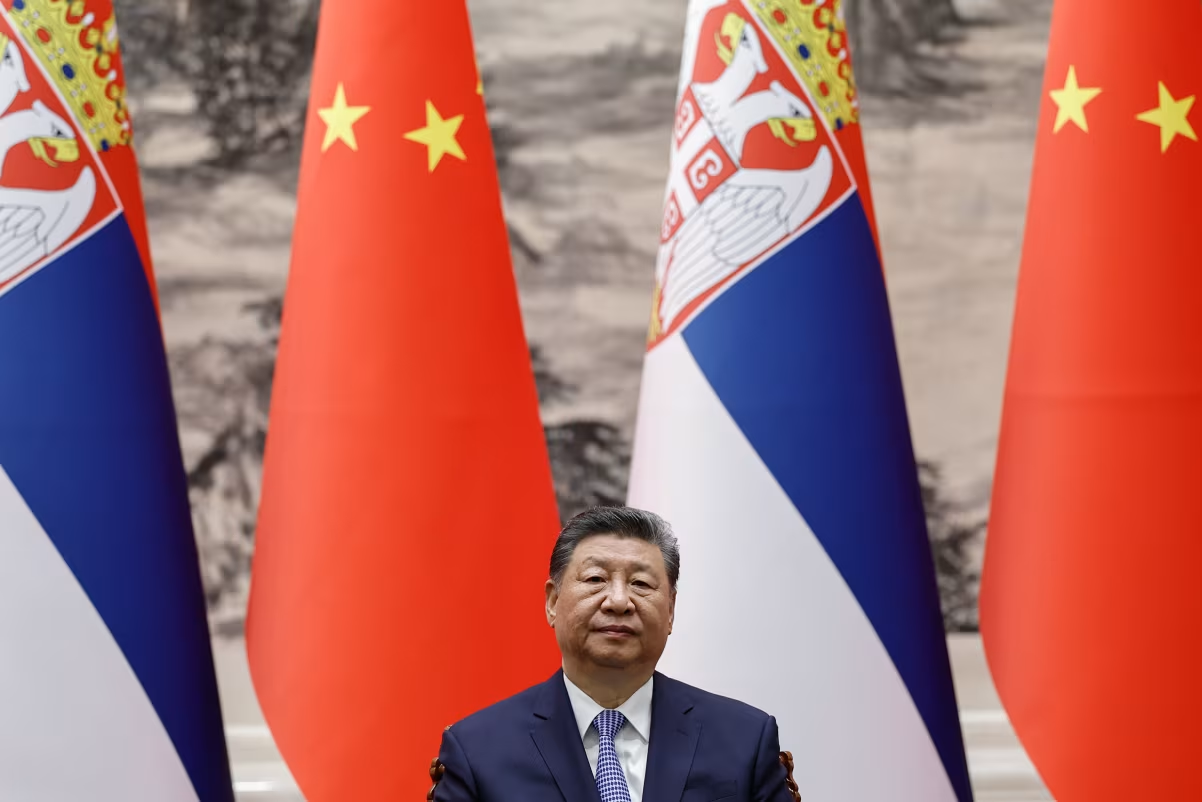
President Xi hosted Trump during a state visit to Beijing in May, and the two leaders are expected to meet again in Washington in late September. Trump has also indicated he may travel to China later this year for the Asia-Pacific Economic Cooperation (APEC) summit in Shenzhen, while Xi is expected to attend the G20 summit in Miami.
In recent months, Trump has publicly praised Xi, describing himself as “a big fan” of the Chinese leader and commending China for largely staying out of the conflict involving Iran.
Intelligence documents
The Trump administration also released a series of declassified intelligence documents detailing alleged Chinese cyber espionage activities.
The reports suggest that Chinese hackers sought access to the email accounts of staff working on Joe Biden’s 2020 presidential campaign and collected voter registration data from several US states.
However, the documents do not provide evidence that China altered votes or gained access to election systems capable of changing election results.
Instead, they portray a broad intelligence-gathering effort aimed at collecting personal and political information on millions of Americans.
US intelligence agencies have for years warned of sophisticated Chinese cyber operations targeting government institutions, businesses and critical infrastructure. Previous administrations have responded with sanctions and criminal indictments against alleged state-sponsored Chinese hackers.
Despite his latest allegations, Trump has yet to announce any punitive action against Beijing, underscoring his administration’s determination to maintain diplomatic engagement with China while pursuing investigations at home.
About the Author