The Minority in Parliament has called on the government to immediately suspend all prosecutions under Sections 207 and 208 of the Criminal Offences Act, while demanding the repeal of the two provisions, which it says undermine freedom of expression and democratic governance.
The call follows the sentencing of 43-year-old TikToker Camilla Alhassan to one year imprisonment with hard labour by an Accra Circuit Court after she pleaded guilty to offensive conduct likely to cause a breach of the peace.
Alhassan was convicted for publishing a TikTok video containing derogatory remarks about President John Dramani Mahama and First Lady Lordina Mahama. Prosecutors argued that the statements were offensive and capable of provoking public disorder.
The Ghana Police Service has also indicated that Alhassan could face a separate prosecution before the High Court on charges of false communication under the Electronic Communications Act, 2008 (Act 775).
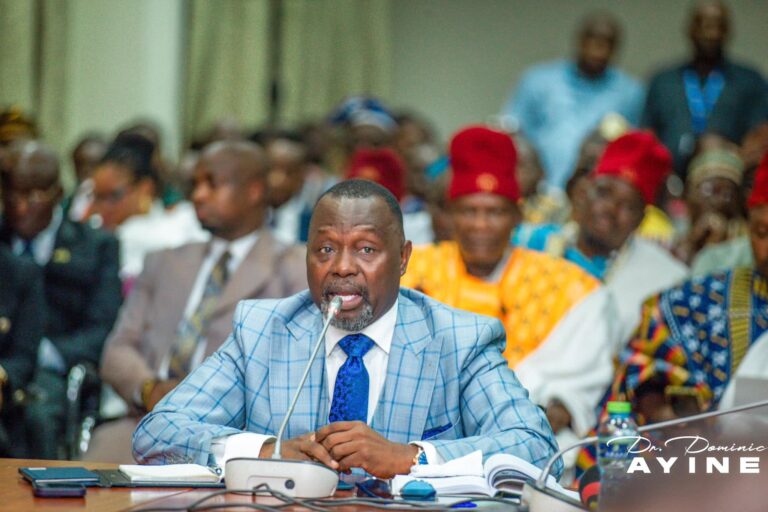
Addressing a press conference in Parliament on Friday, July 17, Minority Leader Alexander Afenyo-Markin condemned the reported move to initiate a second prosecution against the TikToker and urged the government to withdraw all ongoing cases brought under Sections 207 and 208 of the Criminal Offences Act.
“We demand the immediate withdrawal of all pending prosecutions under Sections 207 and 208 of the Criminal and Other Offences Act, including the second prosecution threatened against Camilla Alhassan,” he stated.
The Minority also called for the release of individuals currently serving prison sentences under the two provisions. Mr Afenyo-Markin cited the case of Kwame Nkrumah II, whom he claimed was jailed over a TikTok video approximately six months ago.
“We demand the discharge of any person currently serving a sentence, including Kwame Nkrumah II,” he said.
The Effutu MP further urged Parliament to expedite consideration of legislation aimed at repealing the two sections, revealing that the Minority has already laid a bill before the House seeking their removal.
“We demand the passage, without delay, of legislation repealing both sections. The Mighty Minority is proposing legislation along the lines of the bill already before the House,” he added.
Mr Afenyo-Markin also called on the government to publicly guarantee that no Ghanaian would face criminal prosecution simply for expressing views critical of public officials or government actions.
“We want a public commitment from government that no citizen will face criminal charges for speech that is merely critical, embarrassing or unwelcome to those in power,” he said.
According to him, Ghana’s repeal of the criminal libel law in 2001 marked a significant milestone in the country’s democratic development, and Parliament should now complete that process by abolishing laws that could be used to criminalise speech.
“Ghana chose in 2001 to be the country that led Africa away from criminal insult laws. We are asking this Parliament in 2026 to choose to finish that journey,” he stated.
The Minority Leader further appealed directly to President Mahama to ensure that law enforcement agencies immediately cease prosecuting citizens under the contested provisions.
“We are asking His Excellency President John Dramani Mahama to ensure that no prosecution is undertaken by the police forthwith,” he said.
The Laws in Question
Sections 207 and 208 of the Criminal Offences Act, 1960 (Act 29), have long generated debate among legal experts and civil society groups over their impact on free speech.
Section 207 (Offensive Conduct) criminalises the use of threatening, abusive or insulting words or behaviour intended to provoke a breach of the peace or likely to result in public disorder.
Section 208 (Publication of False News) makes it an offence to publish or reproduce information known, or reasonably believed, to be false if it is likely to cause fear, alarm or disturb public peace.
Both offences are classified as misdemeanours and may attract fines, imprisonment of up to three years, or both under Ghana’s criminal justice framework.
The Minority insists that the continued enforcement of these provisions is incompatible with Ghana’s democratic values and constitutional protections for freedom of expression.
About the Author